
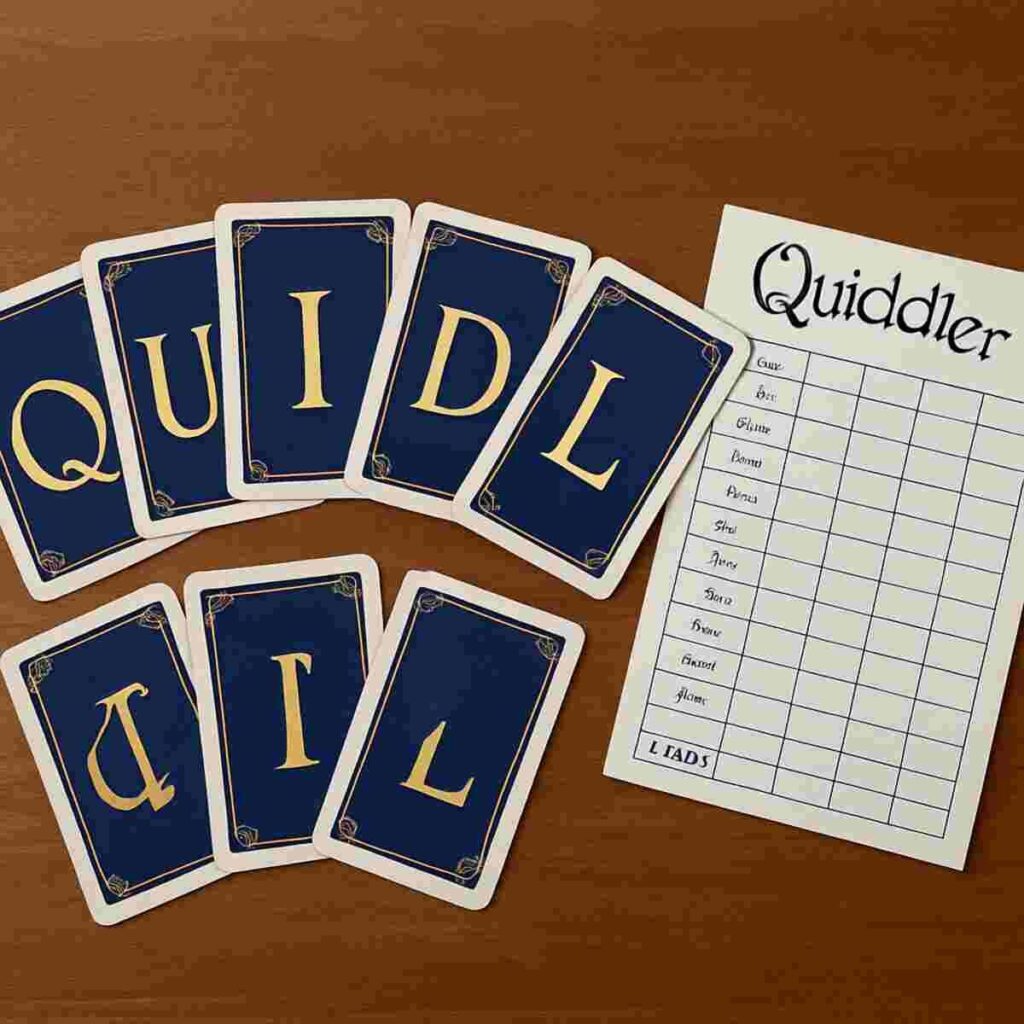

Quiddler is a card game that challenges players to create words from the letters in their hand. The objective is simple: score the most points by forming words with the cards you draw. Each card has a letter and a point value, which contributes to your score when you form a word. To know more, check out bloggerstrek
Understanding the Game Components
Quiddler comes with a deck of cards, each printed with a letter and an associated point value. Understanding these components is crucial for planning your strategy. The cards are similar to Scrabble tiles, where rarer letters like ‘Q’, ‘Z’, and ‘X’ carry higher point values. Familiarize yourself with the deck to anticipate the potential words you can form.
Setting Up the Game
Before diving into gameplay, the setup is key. Shuffle the deck thoroughly to ensure a fair distribution of cards. Deal three cards to each player for the first round, gradually increasing the count by one card in each subsequent round until you reach ten cards. This increasing complexity keeps the game challenging and exciting.
Basic Rules of Quiddler
Before we delve into strategies, let’s quickly cover the basics:
- Setup: Shuffle the deck and deal three cards to each player for the first round. Increase the card count by one in each subsequent round until you reach ten cards.
- The initial rounds with fewer cards require quick thinking and efficient word formation.
- As rounds progress, the game becomes more intricate with more cards, offering more opportunities to form complex words.
- Gameplay: On each turn, players draw a card from the deck or discard pile and then discard one card. The goal is to form words from the cards in hand.
- Choosing between the deck and discard pile is a strategic decision that can influence the outcome.
- Observing opponents’ discards can provide insights into their strategies and help you plan your moves.
- Scoring: When a player goes out, everyone else gets one more turn to make words. Words are scored based on the point values of the cards used.
- Scoring isn’t just about long words; maximizing the value of each letter is crucial.
- Keep track of your score throughout the game to adjust your strategy as needed.
- Winning: The player with the highest score after all rounds wins the game.
- Consistency in scoring across rounds is key to securing victory.
- Balancing risk and reward can make a significant difference in the final tally.
Strategies for Success in Quiddler
Plan Your Words
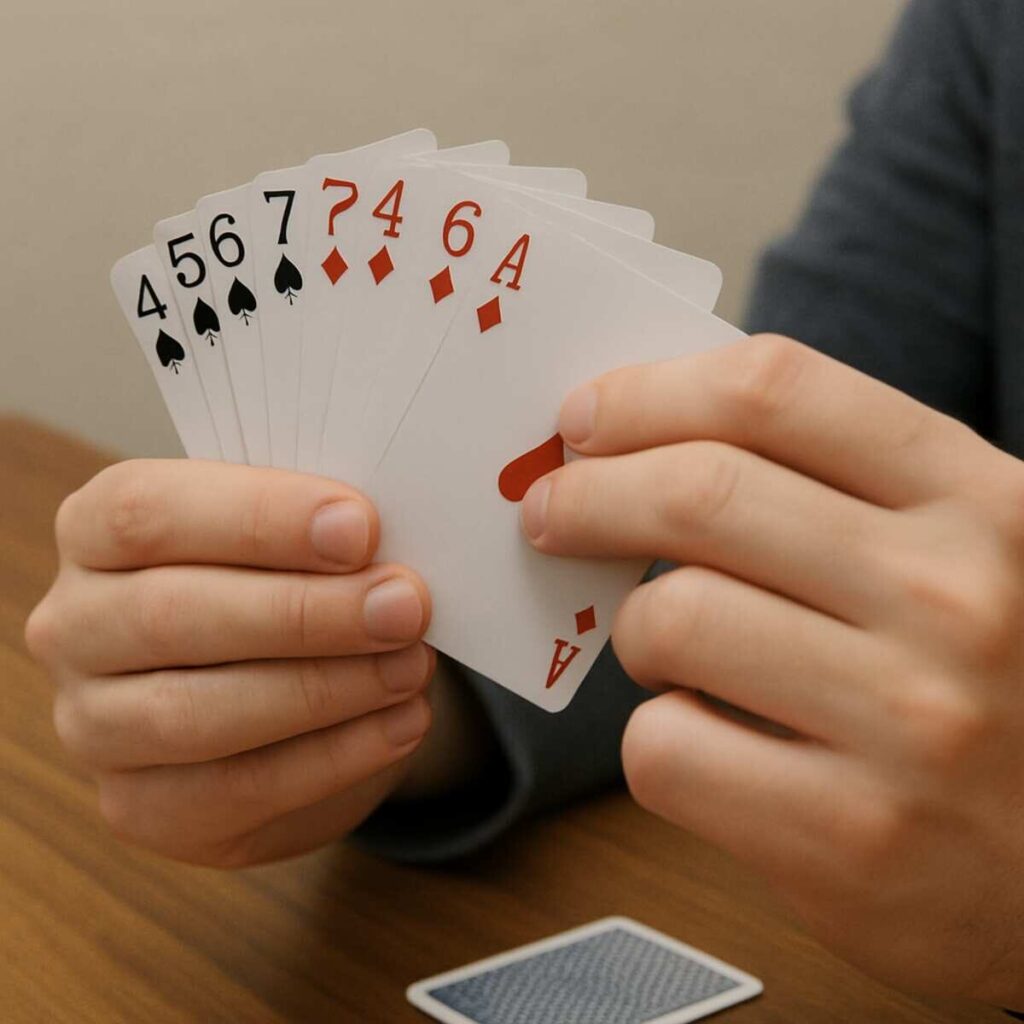
One of the most enjoyable aspects of Quiddler is the challenge of planning and forming words. As you draw cards, think ahead about possible words you can create. This foresight will help you make strategic decisions about which cards to keep and which to discard.
- Thinking Ahead: Consider potential word formations as you draw each card. This proactive approach can give you an edge over opponents.
- Balancing High-Value Letters: Focus on collecting high-value letters, like ‘Q’, ‘Z’, and ‘X’, as they can significantly boost your score. However, balance is key; don’t hold onto these letters for too long if they’re not helping you form words.
- Adapting to the Rounds: As rounds progress and your hand grows, adapt your strategy to handle more complex word formations.
Use the Discard Pile Wisely
The discard pile is a treasure trove of opportunities. Keep a keen eye on the cards your opponents discard, as they might be exactly what you need to complete a word. Similarly, be strategic about what you discard. Try not to give away valuable letters that others can use.
- Observing Opponents: Watch what your opponents discard. This can reveal their strategies and help you anticipate their moves.
- Strategic Discards: If you’re stuck with a tricky letter, consider discarding it to refresh your hand. You might pick up a more useful letter in the next draw.
- Discarding High-Value Letters: Be cautious when discarding high-value letters, as they can be a game-changer for your opponents.
Build on Small Words
In Quiddler, every point counts. Don’t underestimate the power of small words. Building two or three-letter words can keep your score ticking over while you work on longer, higher-scoring words.
- Maximizing Short Words: Words like ‘an’, ‘it’, ‘is’, and ‘at’ are simple yet effective. Use them to maximize your score, especially in rounds with fewer cards.
- Creating Word Chains: Forming multiple small words in one round can accumulate points quickly.
- Transitioning to Longer Words: Use small words as building blocks to transition into longer, more complex words as the game progresses.
Advanced Techniques for Quiddler Champions
Mastering the Quiddler Online Game
Playing Quiddler online can be a different experience from the physical card game. The dynamics change with digital platforms offering quicker gameplay and different user interfaces. Here are some tips for mastering the online version:
- Practice Regularly: Familiarize yourself with the online interface by playing regularly. This will help you quickly spot potential words and adapt to the digital format.
- Regular practice improves your ability to recognize word patterns and increases your speed in forming words.
- Exploring different online platforms can also introduce you to varied gaming experiences.
- Utilize Online Tools: Some platforms offer hints or word suggestions. Use these features to improve your vocabulary and word-building skills.
- These tools can be invaluable for learning new words and understanding different word formations.
- Use suggestions as a learning tool rather than a crutch to enhance your gameplay over time.
- Compete in Tournaments: Online tournaments are a great way to test your skills against other players and learn new strategies.
- Tournaments offer a competitive environment that can push you to refine your strategies.
- Observing skilled players in tournaments can provide insights into advanced techniques and strategic planning.
The Power of Prefixes and Suffixes
Enhance your word-building prowess by focusing on prefixes and suffixes. Adding common prefixes like ‘un-‘, ‘re-‘, or ‘pre-‘ and suffixes like ‘-ing’, ‘-ed’, or ‘-ly’ can turn simple words into high-scoring ones.
- Expanding Vocabulary: Familiarize yourself with common prefixes and suffixes to expand your vocabulary and word-forming options.
- Transforming Words: Keep an eye out for cards that can easily transform the words in your hand. This flexibility can be a game-changer.
- Adapting to Rounds: Use prefixes and suffixes strategically to adapt to different rounds and card combinations.
Balancing Risk and Reward
Quiddler is as much about strategy as it is about vocabulary. Sometimes, taking a calculated risk by holding onto certain letters can pay off. However, it’s crucial to know when to let go.
- Strategic Risks: Assess the potential benefits and drawbacks of holding onto high-value letters. A well-timed risk can lead to a significant score boost.
- Timing Your Moves: If you’re close to the end of a round and haven’t formed a word with those high-value letters, consider switching tactics to ensure you score points rather than holding out for the perfect word.
- Learning from Experience: Reflect on past games to understand when taking risks paid off and when they didn’t, refining your strategy for future games.
Fun Exercises to Hone Your Skills
- Word of the Day: Challenge yourself to learn a new word every day. Use it in your Quiddler games to expand your vocabulary.
- Incorporating new words into your gameplay can make your strategy more versatile and unpredictable.
- This practice can also enhance your overall language skills and make Quiddler more educational.
- Anagram Puzzles: Regularly solve anagrams to improve your ability to see potential words quickly.
- Anagram puzzles train your brain to recognize patterns and potential word formations rapidly.
- Solving these puzzles can increase your speed and efficiency in forming words during gameplay.
- Timed Challenges: Set a timer and try to form as many words as possible within a limit. This exercise helps improve your speed and efficiency during gameplay.
- Timed challenges simulate the pressure of actual gameplay, helping you perform better under time constraints.
- Practicing with time limits can also make regular games feel more relaxed and enjoyable.
Conclusion
Mastering Quiddler is about more than just having a vast vocabulary—it’s about strategy, foresight, and adaptability. By planning your words, using the discard pile wisely, and mastering both the physical and online versions of the game, you’ll be well on your way to becoming a Quiddler champion. Remember, practice makes perfect, so keep playing, keep learning, and most importantly, have fun!
Now that you’ve got some strategies under your belt, it’s time to shuffle those cards and get playing. Happy Quiddling!