


You think “strategy card game” and picture a 50-page rulebook, right? What if you could command epic dragons using three simple steps you can learn in the next five minutes? Forget the complicated reputation; this guide proves that you don’t need to be a seasoned expert to jump into the action and have a legendary time. To know more, check out ufa169
Behind all the amazing artwork and fantasy lore, the main objective in most of these games is incredibly straightforward. Your mission is to use your cards to attack your opponent until their life points drop from a starting total, usually around 20, down to 0. Every card you play and every decision you make is built around serving that one simple goal.
Achieving that victory boils down to a rhythm you repeat each turn. In practice, nearly all easy-to-learn fantasy card games are built on three core actions: first, you gain resources, like gold or mana. Second, you spend those resources to play a card. Finally, you can command your creatures to attack. This “gain, play, attack” loop is the engine that drives the entire game.
Once you understand that simple pattern, you’ve unlocked the secret to a whole world of fun. This single concept is the foundation for almost any card game with dragons you will ever encounter. This guide will walk you through each step, proving you already have what it takes to command these epic dragon battles.
What’s the Point? The Simple Goal of Most Dragon Card Games
In every game, your main goal is straightforward and epic: use your powerful dragons to bring your opponent’s health down to zero. Think of it as a duel between two powerful Dragon Masters. The first player to knock the other out of the fight wins the game.
To keep score, both you and your opponent start the game with a set number of Life Points, usually 20. Imagine this as a health bar in a video game. When one of your dragons manages to land a direct attack, your opponent’s life total drops, bringing you one step closer to victory. This number is the single most important thing to track.
Of course, while you’re busy trying to attack, your opponent is trying to do the exact same thing to you. This creates a thrilling tug-of-war where protecting your own Life Points is just as important as launching an offensive. Your life total isn’t just a score to watch—it’s the most valuable resource you have. So, how do you summon dragons for your attack and defense? It all starts with the cards in your hand.
Your Dragon-Taming Toolkit: Understanding Cards and Resources
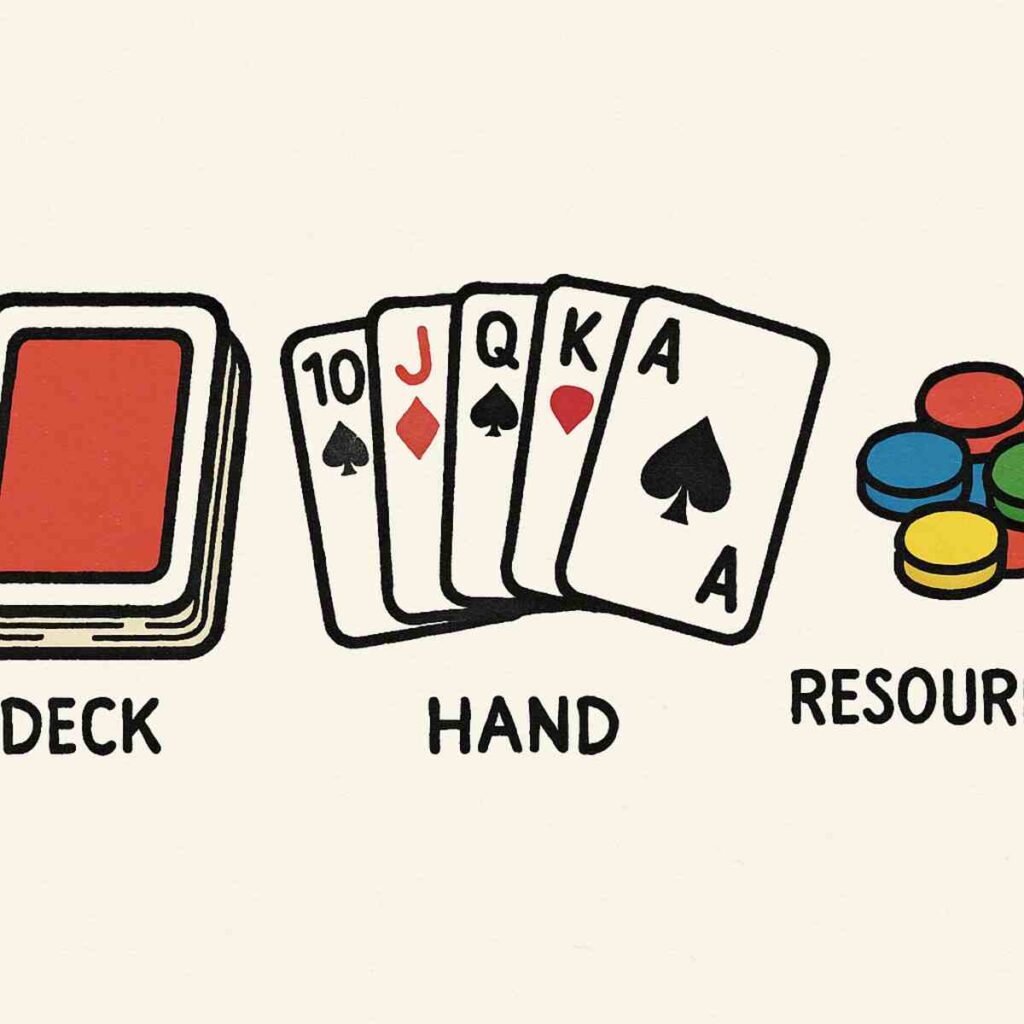
So, you have a life total to protect and an opponent to defeat, but how do you actually summon the dragons to do your bidding? Everything you can do in the game comes from three core components, which work together like a dragon-taming toolkit.
First, you have your Deck, the stack of cards you draw from. Think of this as your entire arsenal of dragons, spells, and tricks, waiting to be unleashed. At the start of the game and on each of your turns, you draw cards from this deck, which form your Hand. Your hand represents your current options—the specific tools you have available to use right now. You can’t use a dragon that’s still in your deck, only the ones you’re holding in your hand.
However, just having a powerful dragon in your hand isn’t enough to get it onto the battlefield. To play almost any card, you need to spend a special resource, which we’ll call Ember. Think of Ember as the magical energy or fuel you get each turn. Every card has a cost, like a price tag, printed on it. If a “Flame Drake” costs 3 Ember and you have 3 or more, you can spend it to summon the dragon. If you only have 2, you’ll have to wait. This system is central to the game’s strategy, as it forces you to make interesting choices about what to play and when.
Your First Turn: The Three Simple Steps to Unleash Your Dragons
Now that you have your toolkit of a deck, hand, and Ember, you’re ready for the fun part: taking action. Learning how to play card games can feel intimidating, but here, every turn follows a simple and memorable rhythm. Once you grasp this basic flow, you’ll be well on your way to commanding your own legion of dragons.
Your turn always begins the same way: you draw a new card from your deck and then you gain your allotment of Ember for that turn. This first step is all about powering up, giving you fresh options in your hand and the fuel you need to use them. It’s a moment of possibility where you get to see what new dragon or spell you’ve just drawn.
After you have your resources, the choices begin. The second step is to play a card from your hand, like a dragon or a spell, by paying its Ember cost. Following that, the third step is to attack your opponent with any dragons you already have on the battlefield from previous turns. The key word for both of these steps is if you want to. You are never forced to play a card or attack if saving your resources or holding back your dragons feels like a better move.
This straightforward sequence—Power Up, Play, and Attack—is the core of the entire game. Your opponent will then do the same on their turn. Understanding these fundamental card game rules is your key to victory.
How to Summon Your First Dragon (And What It Costs)
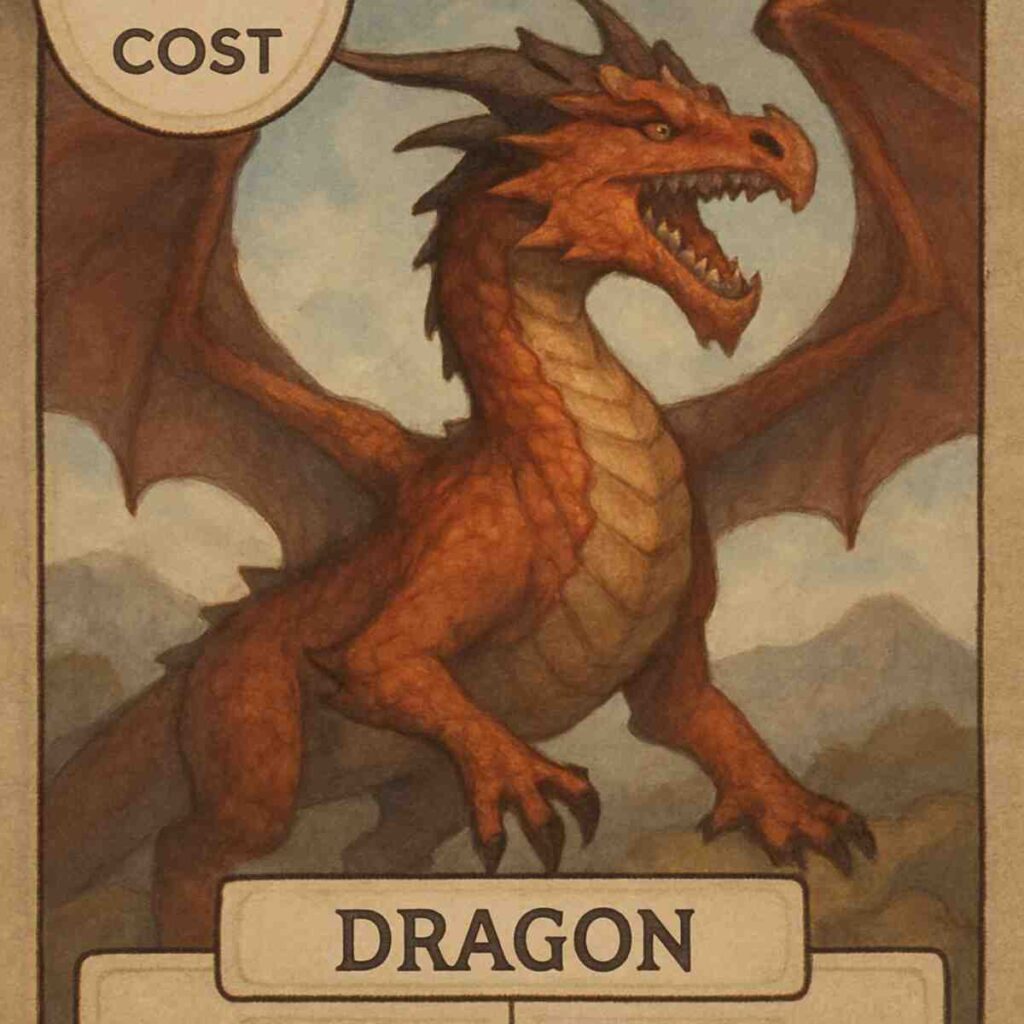
Every dragon card in your hand is an opportunity, but it comes with a price. Think of the number in the top corner of a card as its price tag. This is its “Ember Cost,” telling you how much of your turn’s resources you need to spend to bring it onto the battlefield. For example, if you want to play the Stonehide Dragon shown here, you’ll need to have at least 3 Ember ready to go. Cheaper dragons might cost only 1 or 2 Ember, while the truly colossal beasts will require much more.
To summon that dragon, you simply announce you’re playing it and subtract its cost from your Ember pool for the turn. Let’s say you started your turn with 5 Ember. After you play the Stonehide Dragon, you’ll have 2 Ember left. Now, the dragon is officially on the field under your command, and you could even use your remaining Ember to play a cheaper card, like a spell that costs 2 or less. Any Ember you don’t spend is simply lost at the end of your turn, so don’t be afraid to use it!
This simple act of paying a cost is where the game’s strategy begins to unfold. Do you spend all your Ember to summon one mighty dragon, leaving you with no other options? Or do you play a few smaller, less expensive dragons to build up your forces? The choice is yours. Once your new dragon is on the battlefield, it must wait a turn before it can attack. But on your next turn, it will be ready to join the fight.
The Rules of Dragon Combat: A Quick Guide to Winning Fights
So, your dragon has waited a turn and is ready for glorious combat. But how do you know if it will win a fight? The answer is right on the card. Look near the bottom, and you’ll find two crucial numbers. The value next to a sword icon is its Attack—that’s the amount of damage it deals in a single fight. The value next to a shield icon is its Health, which is how much damage it can take before being defeated.
Winning a skirmish comes down to simple math. When you decide to attack an enemy dragon, you just compare your dragon’s Attack to the defender’s Health. If your Attack is equal to or higher than their Health, your dragon wins! The defending dragon is defeated and sent to the discard pile. For example, if your fearsome dragon with 5 Attack challenges an enemy dragon with only 4 Health, their creature is overwhelmed and removed from the battle.
This core rule governs all the epic dragon battles you’ll command. As the attacker, the power is in your hands. You get to decide which of your ready dragons will fight and which enemy to target. This simple choice is what makes this dragon card battler so engaging. Soon you’ll be looking at your whole team, figuring out how to build a strong dragon deck where they can work together to take down even the biggest threats.
How Your Dragons Work Together: A Simple Guide to ‘Synergy’
You’ve seen how a single powerful dragon can win a fight, but the real magic happens when your dragons team up. Think of it like a sports team: one player might be fast and another strong, but they become truly effective when they work together to score. In a card game, this teamwork is called “synergy,” and it’s what separates a good dragon commander from a great one.
Some dragons have special abilities written on the card that go beyond their basic Attack and Health. For example, imagine you have a simple “Mountain Drake” on the field. It’s a solid fighter. Then, you play an “Elder Dragon” from your hand, and its ability reads: “When you play this dragon, give your other dragons +1 Attack this turn.” Suddenly, your once-solid Mountain Drake becomes an even bigger threat, all thanks to its new teammate.
This teamwork is the core of card synergy for dragon decks. It’s a simple but powerful concept that lets you feel like a clever strategist. Learning how to build a strong dragon deck isn’t just about finding the single biggest card; it’s about finding the best team of cards that help each other shine on the battlefield. This is where the game opens up, offering endless fun combinations to discover as you play.
Which Dragon Game is Right for You? A Guide to Game Types
Now that you understand how dragons can work together, you might be wondering which of the best tabletop games with dragons is the right fit for you. Not all “card games” are created equal; the experience can change dramatically based on the game’s style. Knowing the difference helps you find a game you’ll truly love.
Some games are all about collecting. Think of it like collecting baseball cards, but you can actually battle with your collection. In this style, you build your perfect dragon army by opening booster packs to find rare creatures or by trading cards with friends. The fun comes from the thrill of the hunt and carefully crafting your deck before the game even begins. This is what many people imagine when they hear the term “dragon trading card game.”
In contrast, other games have you build your deck during the game itself. Everyone starts with the same small, basic set of cards. On your turn, you use those cards to “buy” bigger and better dragons from a shared marketplace, adding them directly to your deck as you play. This style tests your ability to adapt your strategy on the fly and is a hallmark of many top-rated dragon deck-building games.
Finally, many games use dragon cards as just one part of a bigger adventure on a game board. In these, the board is the star of the show, and the cards in your hand are the tools you use to interact with it. A card might let you move your dragon miniature to a new location, breathe fire on a specific space, or claim a piece of treasure. The choice depends on what excites you most: the thrill of collecting, the challenge of building on the fly, or the joy of a board-based adventure.
Case Study: Baking with Dragons in ‘Flamecraft’
Let’s challenge the idea that all dragon games must involve epic clashes. What if the goal was to run the town’s most successful fantasy bakery, with tiny dragons helping you bake the bread? That’s the charming premise of Flamecraft. In this game, you aren’t a warrior; you’re an artisan. Your goal is to gain reputation by visiting shops and using your adorable dragon helpers to craft wonderful things, from potions to pastries. It completely flips the script on what a dragon-themed game can be.
The gameplay is just as welcoming as its artwork. On your turn, you simply move your character to one of the shops in town. Each shop provides different resources—visiting the bakery might give you bread, while the iron forge provides metal. The artisan dragons you’ve collected can be placed at these shops to give you even more goods. This creates a delightful puzzle of figuring out where to go to get the ingredients you need for your next big creation.
Once you have enough resources, you can fulfill an order, or “enchantment,” to score points. It’s a satisfying loop: visit a shop, gather goodies, and then use those goodies to make something magical. With straightforward Flamecraft game rules and strategy, it’s one of the most easy to learn fantasy card games available. It’s even a fantastic solo playable dragon-themed board game for a cozy afternoon, proving that dragons can be collaborators, not just combatants.
For Epic Battles: A Peek into Magic: The Gathering’s Dragons
While some games let you bake with dragons, others place you at the head of a draconic army. For those who crave epic clashes, the world’s most famous trading card game, Magic: The Gathering, offers a thrilling way to play that puts a powerful dragon directly under your command. Don’t worry about the game’s legendary complexity; we’re just looking at one specific, accessible concept for dragon battles.
Imagine having a main character for your deck—a single, heroic dragon that leads your forces. In a popular game mode called Commander, you do just that. You choose a special “Legendary Creature” card to be your Commander, which starts outside your deck in its own zone, ready to be called upon. This means your favorite dragon isn’t just a random card you hope to draw; it’s the centerpiece of your strategy, a hero that can return to the battlefield again and again.
This focus on a single leader makes the game much easier to grasp. Instead of learning dozens of complex strategies, your goal is simple: support your dragon Commander. The other cards in your deck are chosen specifically to help it, making the collectible dragon card mechanics feel more like building a supporting cast for your star. This approach, where the various trading card game dragon types are explained by their relationship to your leader, transforms a potentially overwhelming game into a personal story of you and your legendary beast.
Build Your Dragon Engine: What ‘Wyrmspan’ Teaches Us
Instead of leading one dragon into battle, what if your goal was to create the perfect home for them? This is the beautiful idea behind Wyrmspan, a game that has quickly become one of the best tabletop games with dragons. Many players will recognize its roots in the wildly popular bird-themed game, Wingspan. Compared to Wingspan, you’re simply trading feathers for scales. Your job isn’t to conquer but to build an efficient sanctuary for all sorts of draconic creatures, from tiny hatchlings to ancient wyrms.
This style of game is often called an “engine-builder.” Think of it like starting a small factory. At first, you have one little machine that produces a single coin. You use that coin to build a second machine, and now you’re making two coins. In Wyrmspan, you do this by playing dragons into your caves. A small dragon might let you gain an egg, which you then use with other resources to entice a more powerful dragon, who, in turn, gives you even more rewards. Each card you play makes your next actions more powerful.
The payoff for this careful planning is incredibly satisfying. Towards the end of the game, your dragon sanctuary becomes a powerhouse, and a single turn might trigger a cascade of bonuses from the dragons you’ve collected. It’s this feeling of watching your small decisions snowball into a spectacular finish that makes games like this so rewarding. For players who love seeing a plan come together, this style of game is a perfect fit, turning your tabletop into a thriving, fire-breathing ecosystem.
Your Adventure Begins: What to Do Next to Start Playing
You now have the blueprint for these games. You understand the simple engine that powers every epic dragon battle: a goal to reach, a hand of tools to use, and a turn to make your move. This is the fundamental language of these games, and you now know how to speak it.
The best next step is to see this flow in action. Go to YouTube and search for a “how to play” video for one of the games mentioned, like Flamecraft or Wyrmspan. You’ll immediately recognize the simple steps and feel a new sense of confidence as you watch.
When you see one of these fantasy board games for beginners, you won’t see a box of intimidating rules. You’ll see a hoard of dragons waiting for a commander who understands them. That commander is you.